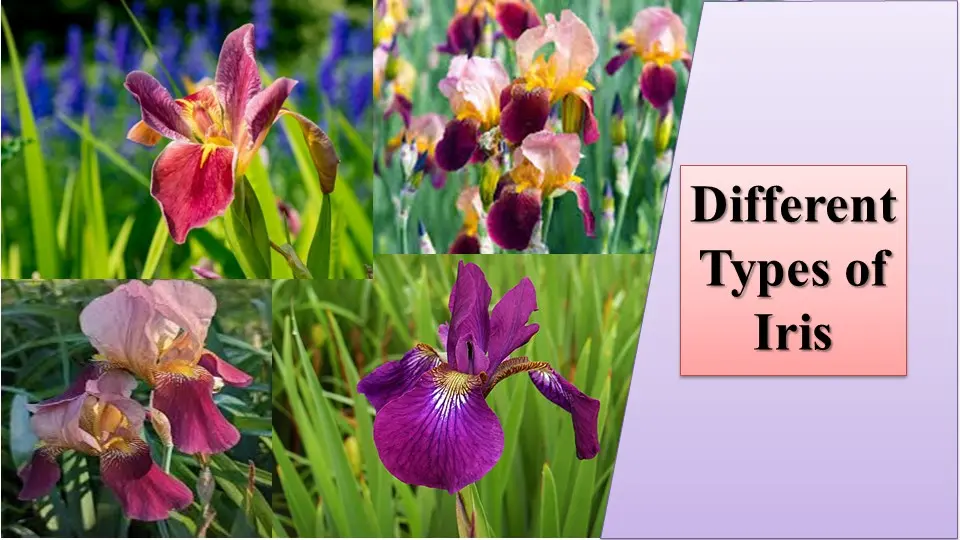
Different Types of Iris: Recognized the 8 Best-Known
Iris is one of the most popular, beloved flowers that can be easily identified due to its distinctive and unique features. The name “Iris” originates from the Greek name for the goddess of the rainbow and hence, growers can get a variety of colours to choose from to grow in the garden. They are distributed almost on every continent, and a place ranges from dry, rocky to alpine or swampy.
Though there are different types of iris, some of them hold a major status which includes Bearded iris (German Group/Common Garden irises), Siberian, Japanese iris, Louisiana and Dutch iris. The following article mentions the different types of iris or flag flowers in brief, along with some maintenance tips for raising them in your garden.
Different Types of Iris: An Overview
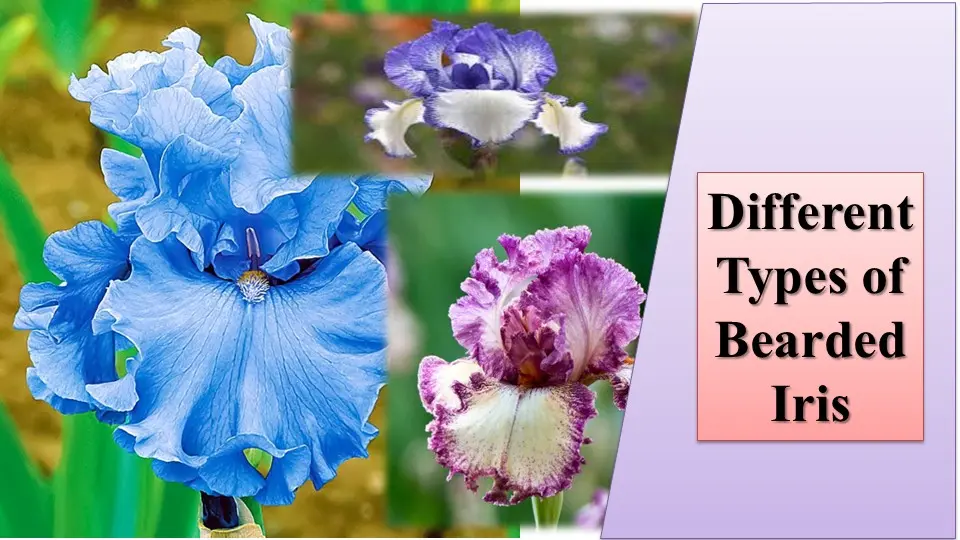
Currently, there is an extensive varietal diversity of iris plants in existence. Broadly, they are classified based on growth/ structure ( Bearded/Beardless iris) and the part from which they can be grown, which includes Bulbous irises and Rhizomatous irises. Though there are more than 300 species in the Iris family, the most notable ones are given below.
| Species Name | Description |
| Bearded Iris | The botanical name for bearded iris is Iris germanica. These irises are the most popular, hardy perennial plants, characterised by colourful flowers with striking, sword-like leaves and upright standards, amongst the different types of iris. They need more division due to their clumpy growth and can reach up to 4 to 40 inches per year. |
| Sweet Iris | Iris pallida, known for its beautiful, fragnant, light-purplish blue flowers that grows above the sword-like leaves. They grow more than 24 inches in height and the flowers bloom best from late spring to early summer. These plants requires low-maintenance and are drought tolerant too. |
| Black Iris | Across the different types of iris, these are one of the fascinating types of iris that are well known for their deep, velvety, purple-black flowers with a white spot in the middle. Iris nigricans is also a national flower of Jordan, which reaches up to a height of 14 inches. |
| Dutch Iris | Iris hollandica is a type of bulbous, perennial iris within the different types of iris that are known to produce colourful bulbous plants with a strong stem. These types of iris are less fragrant and grows to a height of 18-24 inches. The blooms are more popular for cutting gardens due to their longer vase life. |
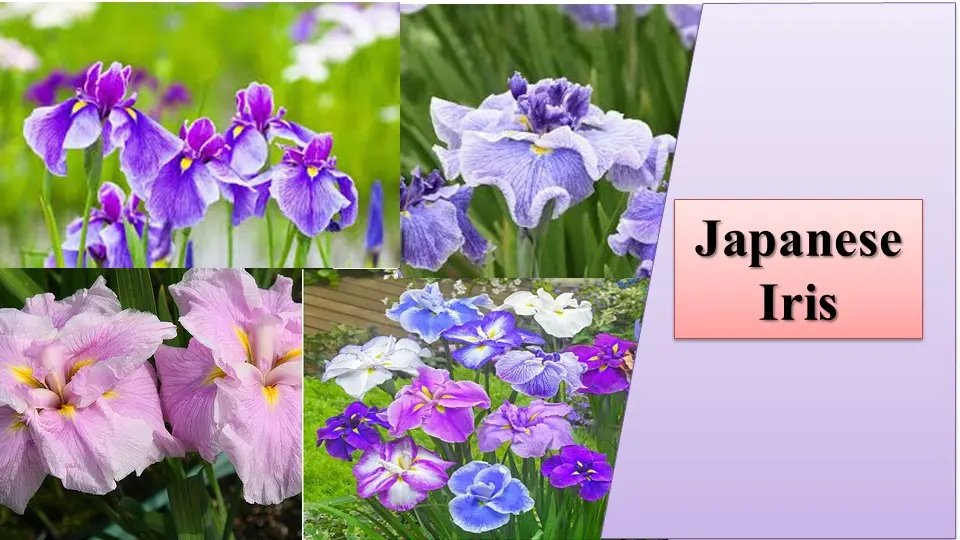
| Japanese Iris | It is also called by the name of Iris ensata or Japanese flag and is a native of Japan. It is noted for its stylish, large and vibrant flowers. These types of iris tend to be tall and achieve a height of 3-4 feet. They typically bloom from early to mid-summer and come in various colours, ranging from pure white to deep purple. |
| Siberian Iris | Yet another addition in the different types of iris are the Iris sibirica, that are originally from Northeastern Europe and Central Asia. It showcases its gorgeous flowers in the shades of blue, purple, red-violet, brown, orange and yellow. Flowering generally occurs in late spring to early summer in these types of iris. It is a more popular choice for perennial borders and for waterside plantings. |
| Yellow Flag Iris | A herbaceous perennial known to produce yellow colour flowers is this Iris yellow flag or Iris Pseudacorus. It grows along the shores of shallow water and can grow upto a height of 2-3 feet. |
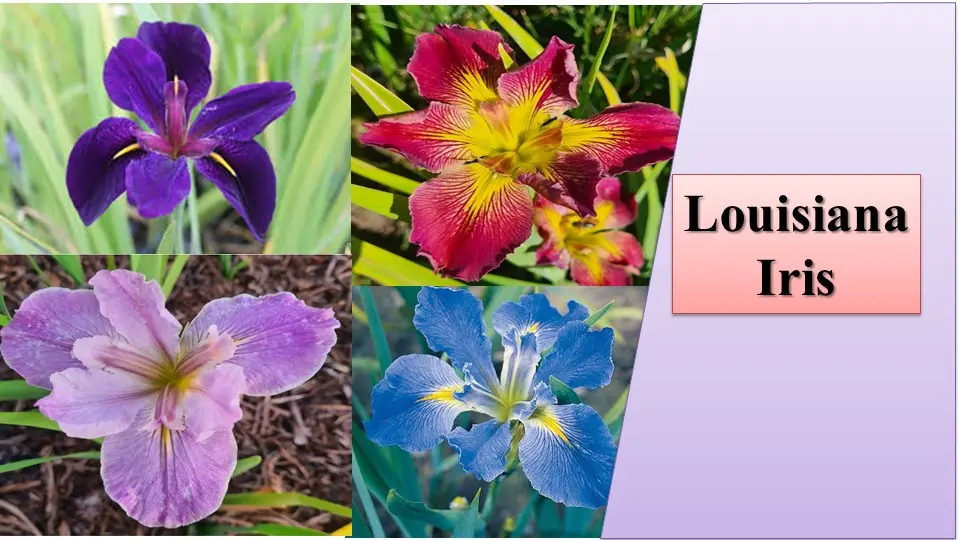
| Louisiana Iris | These types of iris grow from rhizomes (underground stems) in the soil pH of 6.5. They exhibits a very diverse range of colours amongst any type of iris. These easy to grow species possess tall stalks of 3-4 feet height. Commonly known by the names of Water iris, Swamp iris, and Dixie Iris, Iris hexagona is a clump-forming evergreen plant. |
Care and Maintenance Tips
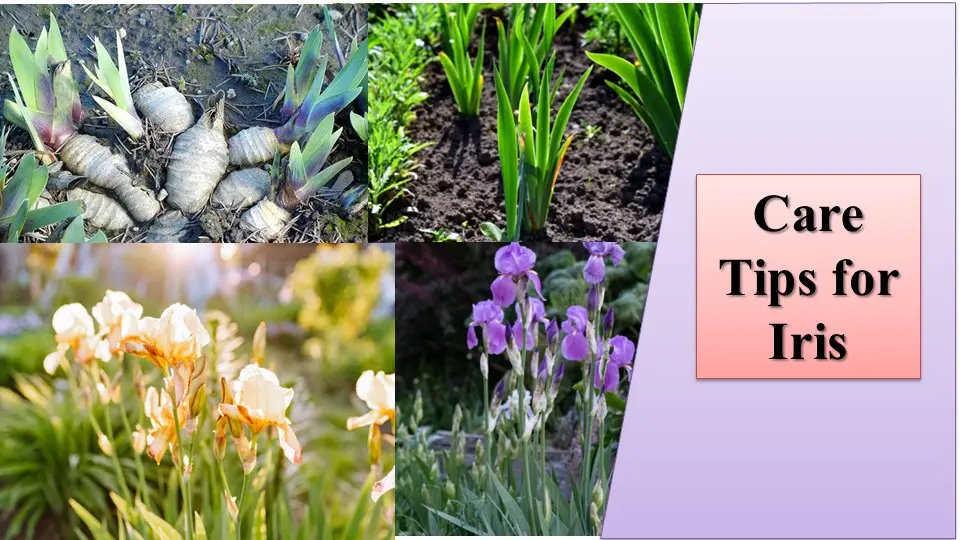
Iris is truly a classic flower with a lovely arching petals and tall, majestic foliage. This showstopper comes in a wide range of varieties, colours and sizes which indicates that there is an ideal type for almost each garden. Though, it requires low maintenance and care (which also depends upon the variety), but with some few basic guidelines, one can grow the best irises in his flower garden.
- Planting time- The ideal time of planting for different types of iris is from late summer to early fall. Generally. soaking of the iris rhizomes in water for a few hours is considered good to fasten germination. A spacing of 12-18 inches between plants is required for good aeration.
- Soil type- A well- drained, sandy-loamy soil is mostly preferred with a pH of 6 to 6.5.
- Light requirement- Most of the bearded iris requires a full sunlight, while others, like Siberian and Japanese irises, can thrive in partial light.
- Water needs- Moisture is required immediately after planting or transplanting of different types of iris. Up to the first growing season, regular irrigation is important until the plants become fully mature. Bearded varieties are generally drought-tolerant and hence are more suitable foe xeriscape garden.
- Nutrient requirements- Initially, a low nitrogen dose is viewed as good for the new irises or transplants. A higher level of phosphorus and potassium is required to promote more blooms in iris plant.
Conclusion
Iris plants exhibit a greater diversity in terms of growth habit, types of flower, and colour. Each category offers a unique aesthetic value to a garden, whether it is a bearded type or a beardless one. An understanding of these types will definitely help the beginner to grow the most suitable iris in the garden. So, if you are a seasoned gardener or a beginner, learning about these different types of iris plants always brings joy.